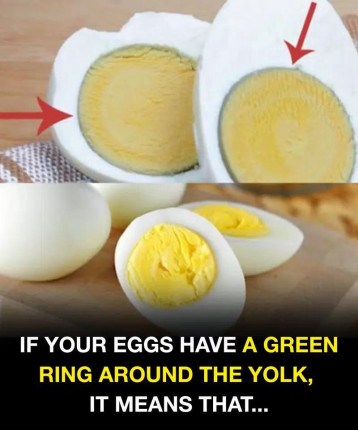
Boiling eggs sounds simple, but anyone who’s peeled a hard-boiled egg to find a strange green ring around the yolk knows it’s not always straightforward. While the egg is still safe to eat, the green ring is often seen as a sign of overcooking — and for many, it can be unappetizing. So how long should you actually boil eggs to get the perfect result? And how can you avoid that off-putting discoloration? Let’s break it down.
🕒 How Long to Boil Eggs
The answer depends on how you like your yolks — soft, medium, or hard. Here’s a simple guide for boiling large eggs:
Soft-boiled eggs (slightly runny yolk): 6–7 minutes
Medium-boiled eggs (jammy yolk): 8–9 minutes
Hard-boiled eggs (fully cooked yolk): 10–12 minutes
Start with eggs in a saucepan filled with cold water. Bring the water to a boil over medium-high heat. Once it reaches a boil, turn off the heat (or reduce to a gentle simmer), cover the pot, and start timing.
🟢 What Causes the Green Ring Around the Yolk?
That greenish-gray ring is caused by a chemical reaction between sulfur and iron in the egg. When eggs are cooked for too long or at too high a temperature, sulfur in the egg white reacts with iron in the yolk, forming ferrous sulfide, which appears green.
It’s completely harmless and doesn’t affect the flavor much, but it can be visually unappealing — especially if you’re preparing deviled eggs or salads.
❄️ How to Prevent the Green Ring
Don’t overcook the eggs
Stick to the recommended time: 10–12 minutes is plenty for hard-boiled eggs. Overcooking them beyond 13–14 minutes increases the risk of discoloration.
Cool the eggs quickly
Next
