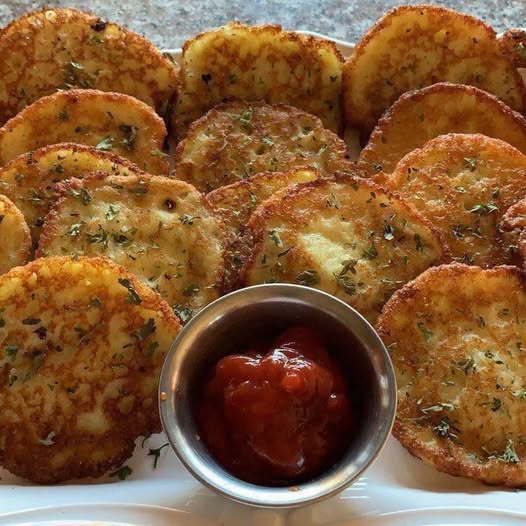
You don’t need anything fancy to make this dish. In fact, part of the charm lies in how straightforward it is. Here’s what you’ll need:
2 ½ pounds Russet potatoes, peeled and grated
1 yellow onion, grated
2 large eggs
1 teaspoon salt
¼ cup all-purpose flour
3 tablespoons of oil for frying (plus a little extra if needed)
That’s it. Five pantry staples transform into a dish that feels indulgent but is actually very simple. Russet potatoes are the best choice because their starch content gives the pancakes that crispy outside and tender inside.
Step-By-Step: How to Make Homemade Potato Pancakes
1. Prepare the Potatoes and Onion
Grate your potatoes and onion, then place them in a clean kitchen towel. Twist the towel and squeeze firmly to remove as much liquid as possible. This step is critical. Too much moisture will keep the pancakes from crisping. The drier the mixture, the crispier your results.
2. Mix the Batter
Transfer the drained mixture into a large bowl. Add salt, eggs, and flour. Use your hands to mix everything together until it feels slightly tacky. If it’s too sticky, sprinkle in a little extra flour, one tablespoon at a time, until the mixture holds together without being gummy.
3. Fry Until Golden Brown
Heat oil in a large skillet over medium-high heat. Once the oil shimmers, scoop ¼ to ½ cup of the mixture into the pan for each pancake. Flatten slightly with a spatula so the pancakes cook evenly. Fry for about 3 to 5 minutes per side, until they’re a deep golden brown with crisp edges.
4. Drain and Serve Hot
Remove each pancake from the skillet and place them on a paper towel-lined plate to absorb any extra oil. Serve immediately, while they’re still hot and crackling.
Serving Suggestions: Sweet or Savory
One of the joys of potato pancakes is how versatile they are. You can serve them sweet or savory, depending on your mood. Here are a few classic pairings:
With applesauce and powdered sugar for a sweet, old-fashioned breakfast
With sour cream or plain yogurt for a tangy, creamy topping
As a side dish with meat and gravy, perfect for Sunday dinners
Topped with smoked salmon and chives, if you want to make them feel elegant
With sautéed mushrooms and onions for a hearty, savory twist
These pancakes fit anywhere on the table: breakfast, brunch, lunch, or dinner. They’re even satisfying as a snack when you just want something crunchy and warm.
Tips for Perfect Crispy Potato Latkes
Many cooks wonder why their potato pancakes sometimes turn out soggy. Here are a few simple tips to guarantee crisp results every time:
Always wring out the potatoes well. Moisture is the enemy of crispness.
Don’t overcrowd the skillet. Fry just a few at a time so the oil stays hot.
Keep the oil temperature steady. Too hot and they burn, too cool and they absorb grease.
Serve immediately. Potato pancakes taste best straight from the pan.
If you want to make them ahead, place finished pancakes on a baking sheet in a 200°F oven to keep warm while you cook the rest. This way, they’ll still be crisp when served.
A Dish That Brings People Together
For many of us, cooking is about more than feeding ourselves. It’s about connection, memory, and tradition. When you fry up a batch of potato pancakes, you’re not just making food — you’re making a moment.
Seniors often appreciate recipes like this because they remind us of simpler times. They take us back to childhood kitchens, family gatherings, or community events where everyone pitched in. Potato pancakes are easy, but they’re also deeply meaningful. They represent thrift, resourcefulness, and comfort, all in one bite.
Sharing them with grandchildren or teaching younger family members how to make them can be a wonderful way to pass on a family tradition. Cooking together creates memories that last long after the last bite is eaten.
Why This Classic Potato Pancakes Recipe Still Matters
In a world of fast food and complicated diets, it’s refreshing to come back to something so simple. Potatoes, onions, eggs, flour, and oil. That’s all it takes to create something that has lasted through centuries of kitchens around the world.
This recipe isn’t just about taste. It’s about comfort, nostalgia, and the joy of bringing people together at the table. It’s a reminder that sometimes the best meals are the simplest ones.
