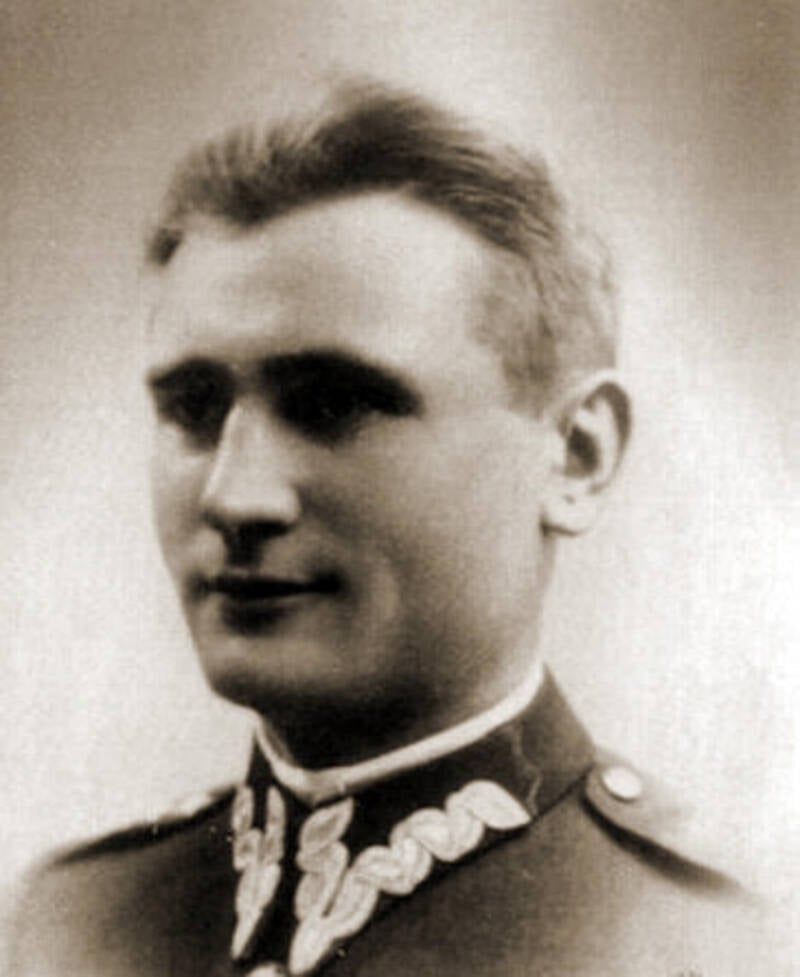
Public DomainPolish infantry marching to meet German troops in 1939.
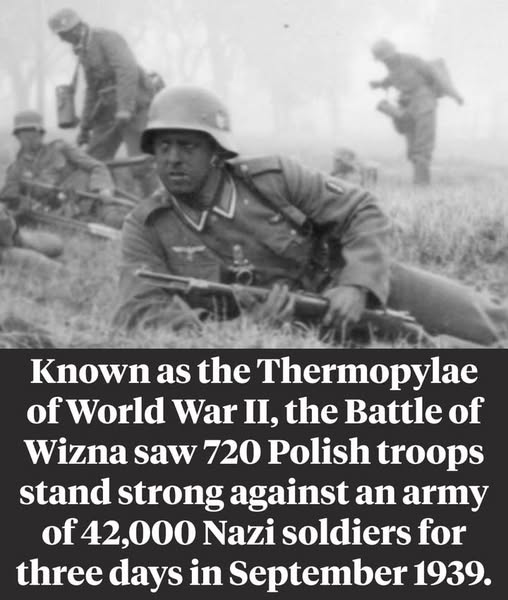
The Battle Of Wizna: When Polish Troops Held Back A German Force 50 Times Their Size At The Outset Of World War II
On September 1, 1939, German forces with the support of the Soviet Union began their invasion of Poland. A week prior, Germany and the Soviet Union signed a nonaggression treaty, the Molotov-Ribbentrop Pact, that delineated spheres of influence across Europe — one that would belong to Germany, and another that would belong to the Soviet Union.
Two days after the invasion, both France and Great Britain declared war on Germany — kicking off the beginning of World War Two.
For the next month, Polish forces fought fiercely against both German and Soviet soldiers pouring into the country from the south, east, and north. The Polish army, numbering close to a million soldiers, was supported by cavalry, 800 aircraft, and around 200 tanks.
Meanwhile, the German Army sent 1.5 million soldiers, 2,315 aircraft, and around 2,750 tanks into Poland. Severely outmanned, the Polish forces prepared for a brutal fight.
And on Sept. 7, 720 Polish soldiers manning a fortified defensive line in the town of Wizna found themselves staring down a German force of over 40,000. To the surprise of everyone involved, the Poles were able to hold off the Germans for three days during the Battle of Wizna.
How The Battle Of Wizna Began
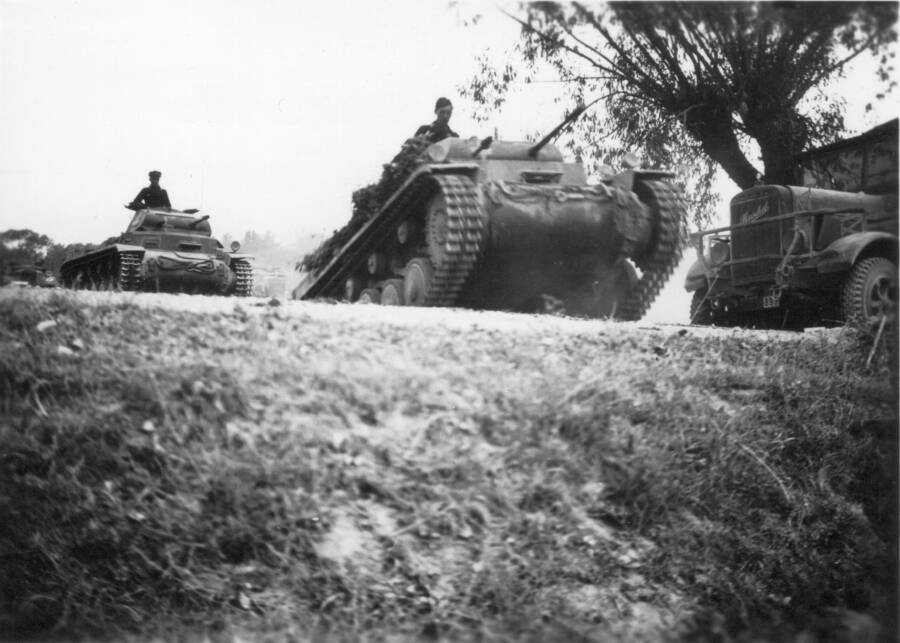
Public DomainGerman troops arriving by tank in Kurpiki, less than 10 minutes away from Wizna, during the invasion of Poland.
In September 1939, 720 Polish soldiers manned the 5.5-mile line of defenses along the high riverbanks that passed between the villages of Kołodzieje and Grądy-Woniecko. The town of Wizna was located in the center.
The defensive line protected an important road, the Łomża–Białystok, that led straight to Warsaw, Poland’s capital. A few months prior, the Polish government had ordered the construction of fortifications along this line. By the time the war broke out, it featured six concrete bunkers (and four more under construction), two lightweight concrete bunkers, eight machine gun pillboxes, and anti-tank trenches.
The Polish soldiers had six pieces of 75 mm artillery, 24 heavy machine guns, 18 light machine guns, and two anti-tank rifles. They were led by 31-year-old Captain Władysław Raginis, who swore that he would do everything in his power to stall the invasion while he was still alive.